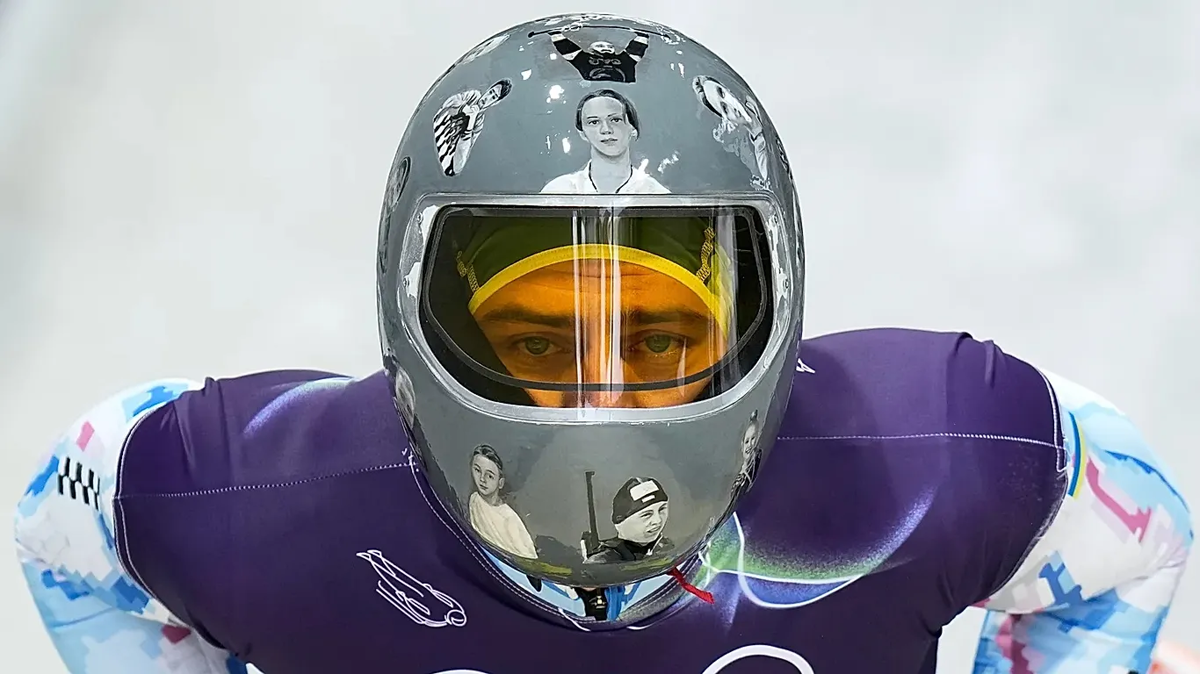
The case, unfolding at the competition venue in Cortina d'Ampezzo, amplified a latent tension at the Games: the clash between the principle of sporting neutrality invoked by the Olympic movement and the political and humanitarian weight of a war that, for Ukraine, admits no equidistance. The Chair of the IOC Athletes' Commission, Kirsty Coventry, met with Heraskevych in a meeting she described as 'very respectful' and assured that, from the perspective of a former athlete, she wanted to see him compete. For the IOC, however, the case presents a regulatory red line: allowing exceptions on the field of play, they argue, could turn every competition into a dispute of messages, with risks of escalation and conflict between delegations. This reconsideration was accepted, so Heraskevych could remain accredited within the Games, although the ban on competing remained. The Ukrainian reaction escalated rapidly. While the IOC attempts to shield the event under a rule of neutrality, Ukraine denounces that this posture ends up, in practice, favoring the aggressor's narrative and silencing those seeking to remember the direct victims of an invasion. The decision, adopted under the argument of avoiding 'politicization' on the field of play, generated an immediate reaction from the Government of Ukraine, which described the episode as a 'moment of shame' for the Olympic body and questioned the yardstick of neutrality in the face of a military aggression that has already directly impacted the country's sport and infrastructure. The objected helmet by the IOC did not include slogans or party symbols, but images of athletes who died in the conflict. Nevertheless, it was emphasized that the regulation requires preserving the competition ground as a message-free zone. However, the battle is already joined: not over a helmet, but over the political meaning of neutrality in times of war. Two other Ukrainian athletes denounced being excluded or restricted for supposed political messages on their helmets. Among those options, the IOC proposed that the athlete wear a black armband during the competition as a form of commemoration. Far from accepting that solution, Heraskevych defended his decision as an act of dignity and remembrance. The freestyle skier Kateryna Kotsara affirmed that she was objected to the inscription 'Be brave like Ukrainians'. From Ukrainian diplomacy, they also emphasized the quantifiable impact of the invasion: hundreds of athletes and coaches dead and numerous sports facilities damaged, an argument that seeks to place the debate on the ground of victim and aggressor, not on a 'formal neutrality'. The IOC has banned not the Ukrainian athlete, but its own reputation. However, the body maintained that, beyond the content, the problem lay in the place chosen to express it: the competition. And the short track speed skater Oleh Handei stated that he was prohibited a phrase by the poet Lina Kostenko—which he considered motivational and not political—although the IOC interpreted it as linked to the war. For Ukraine, the case crystallizes a contradiction: in a scenario where Russia is identified as the invading power and responsible for the human and material damage, preventing gestures of mourning in competition is equivalent to relativizing the context and punishing the victim. In his offensive, he stated that the athlete intended only to remember comrades killed by Russian aggression and asserted that this gesture does not violate rules or sporting ethics. 'There are things more important than medals,' he expressed in a public message after the sanction, in which he emphasized that the tribute to the fallen should not be treated as a propaganda gesture. It transpired that Coventry also intervened to avoid a harsher sanction: she exceptionally requested the Disciplinary Commission to reconsider the withdrawal of the athlete's accreditation. In tune with that reading, the Commander-in-Chief of the Ukrainian Armed Forces, Oleksandr Syrskyi, expressed support for the tributes by publicly stating that 'remembrance is not a violation,' a phrase that was replicated on networks and in images disseminated by military and athletes. Courage lives within each of us. Dignity and honor are always worth fighting for! Remembrance is not a violation. In the midst of Milano-Cortina 2026, the disqualification of Heraskevych opens a political and reputational front for the Olympic movement. The Minister of Foreign Affairs, Andrii Sybiha, pointed against the IOC in a high-voltage phrase: he stated that the body 'did not ban the Ukrainian athlete, but its own reputation,' and anticipated that future generations will remember the episode as an act of shame. Cortina d'Ampezzo-February 12, 2026-Total News Agency-TNA— The International Olympic Committee (IOC) disqualified Ukrainian skeleton racer Vladyslav Heraskevych before his first participation in the Winter Olympics Milano-Cortina 2026, by prohibiting him from competing with a customized helmet that featured portraits of Ukrainian athletes killed in the war unleashed by the large-scale Russian invasion that began in 2022. The case of the skier Dmytro Shepiuk also circulated, amid controversies over stickers and messages of support for 'Ukrainian heroes.' The background of the episode exposes the Olympic dilemma in a context of war. According to the official version, there were multiple exchanges and in-person meetings with the athlete, but Heraskevych rejected 'compromise' alternatives offered to channel the tribute without violating the regulatory framework that seeks to keep competitions free of messages. The conflict was not limited to a single case. Future generations will recall this as a moment of shame. He simply wanted to commemorate fellow athletes killed in war.